Brent’s Journey
Featured




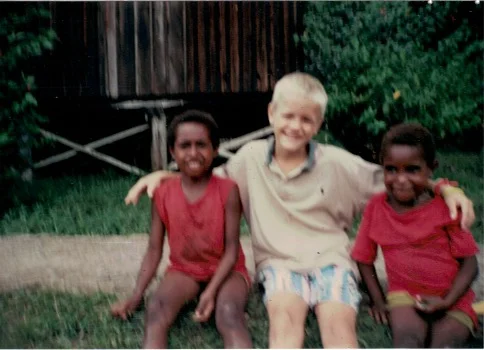
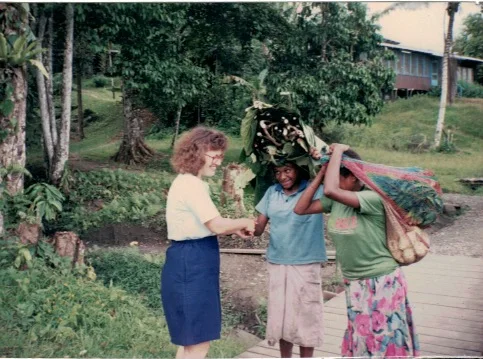



Indonesia is a nation of islands. Papua is the most eastern of the islands and shares its land mass with Papua New Guinea. The mountains, jungles, and rivers isolate the many minority language communities. The people are culturally fascinating. Some of the groups have never had contact with the outside world. (photo by Trevor Cole).
Life is especially difficult for women and children. Despite the conditions, they live, love, and laugh as they meet their world head on.
My job and delight was to meet the needs of the people of Papua and improve the quality of their lives. It was priority, when I was not playing with young crocs.
Malaria is the number one cause of death among the Papuan dwellers. Here, along with a US Naval doctor, who specialized in malaria and mosquito studies, we introduced netting. This netting was treated by a natural occurring plant chemical that kills mosquitoes, but is safe for humans.
Traveling by air and canoe I would often spend weeks visiting villages and working with our linguists. Pictured here, I am training the men and boys how to build a grinder from local materials to sharpen their machetes imported from the outside. A sharp machete was vital to survival. It provided efficient ways to clear paths, build homes, develop gardens, and cut up wild game. It made the process efficient and most importantly conserved work calories.
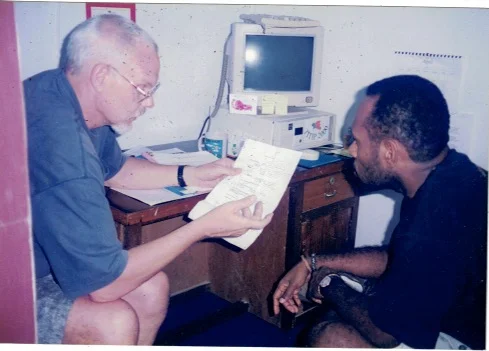
My time and service were split between remote areas and town. Here I am tutoring Jason of the Dani clan in writing a paper in English to qualify for studying abroad. Over the years Jason went from student to director of an Indonesian educational foundation.
Traveling to church with the family. Our youngest son, Zack is on the fuel tank, and behind me, our middle son, Josh. Jeanette is on her scooter (which is called a ‘bebek’ in Indonesian) with our oldest son, Cole. For years, that was our only transportation. It was common to see Indonesian couples with three children all riding on one bike. I doubt that we could do this today with our adult children.
Jeanette does early morning shopping at the markets. It is best to be there just after sunrise to choose fish, chicken, pork, and fruits and vegetables because of lack of refrigeration at these locations.
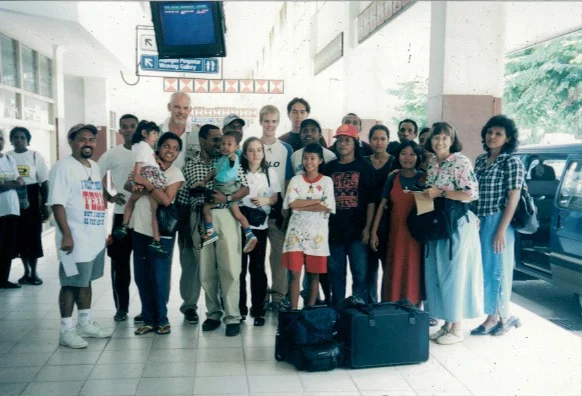
Our students from the school Jeanette and I helped found, along with Papuan friends, gather at the airport to wish us farewell as we leave on furlough. Both Jeanette and I taught courses to prepare them to transition to Western institutions.
The French designed Helio Courier was made for flying in mountainous jungle areas. They have a short take-off and landing ability. They are the workhorses for uneven grass runways and built rugged for the possible tree top crash landing.
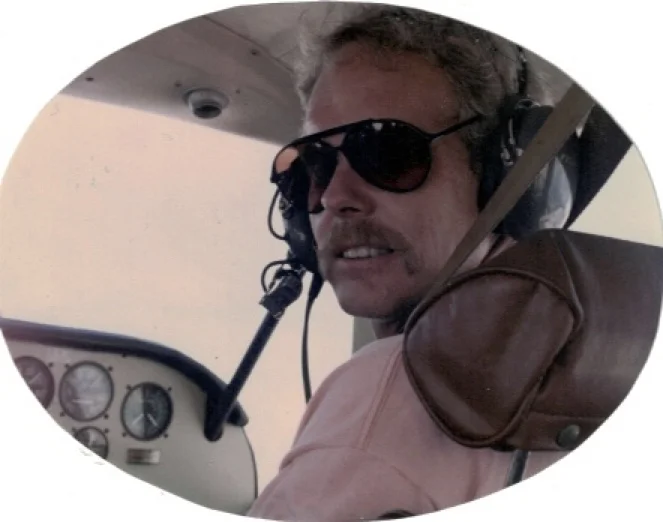
Our pilots were exceptionally skilled flying those Helios in airspace over uncharted land without any transponders, GPS, or beacons to guide them in the early days. They flew by sight. I had full confidence in them, but prayer preceded and ended all my flights.
Community development includes literacy classes and the production of books in the mother tongue of the people. Here this man is seeing the value of learning to read. The booklets are instructions with illustrations on how to build a clean water catchment.
Our family attending a Papuan wedding in town. Note lack of smiles on the bride and groom. The people were generally smiling. However, smiling for photos was not appropriate. That is similar to photos taken in the US several generations ago.
One of our translators prepares to teach a class on literacy in a group’s mother tongue.
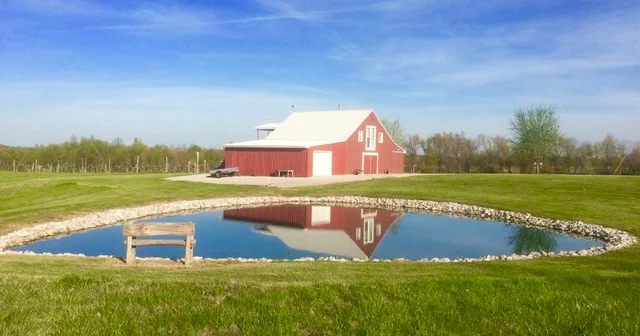
When I inherited this barn on 104 acres, it was home to mice, birds, and sometimes a visiting snake. God gave me purpose for this aging sentinel as he gave me a purpose in missions decades ago.
The refurbished loft includes two stained glass windows in memory of my father, donated by Will Ed Arflack who served with him in WWII. They knew each other in high school and renewed their friendship in 1944 as soldiers in Italy.
Mr. Arflack skills are on display at a local Baptist Church. He graciously volunteered to create the two stained glass windows, a lighthouse and cross, in memory of my father. He has since gone on to join my father in glory.
The finished barn has a deck looking out on the farm. Note the stacked firewood ready for the winter.
Early in the mornings and evenings, a parade of wildlife can be seen. Deer, turkey, eagles, hawks, and an occasional bobcat or coyote who seem to be oblivious to human eyes as they parade from woods to fields and back to fields again.
Step from the deck to enter the living quarters. The barn posts are original. The 200 year-old table was a gift from a dedicated church lady who passed away just short of her 101st birthday.
The dawn could be observed from the bed through double glass doors as it birthed a new day.
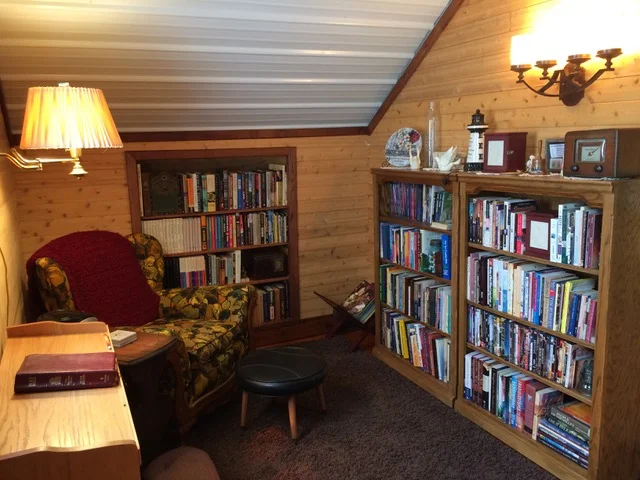
My favorite place. When it was not occupied by guests, I often retreated to this area of the loft and visited my favorite authors. Many missionaries and pastors relished their devotional time in this library nook.
It took many years and loving labors to create this retreat. We are grateful to a skilled Amish family of carpenters who we worked with to design and build this project. We also had so many friends and churches who made this dream their dream by gifts of furnishings and funds. Without them this dream would not become a reality.
From our deck, Jeanette captured one half of a rainbow as we stood resting in a retreat 80% completed for those in need. We believe it was a smile from God.
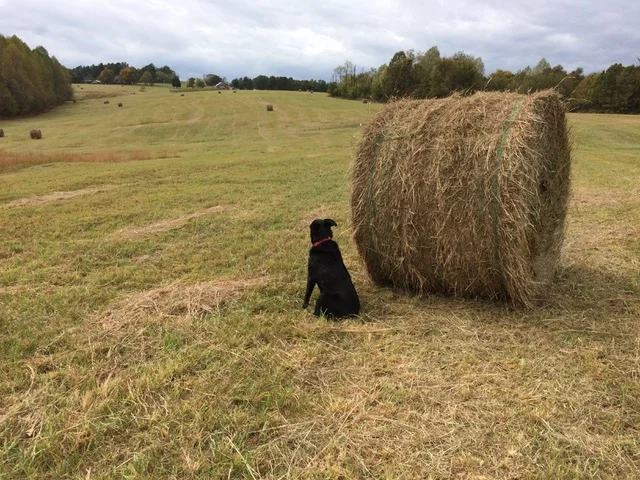
I am convinced that dogs too, share the ability and need to contemplate as do humans. You will hear more about "Sam” on this website.